Movement isn't just exercise.It is how the brain learns.
Therapy peopleactually want to do.
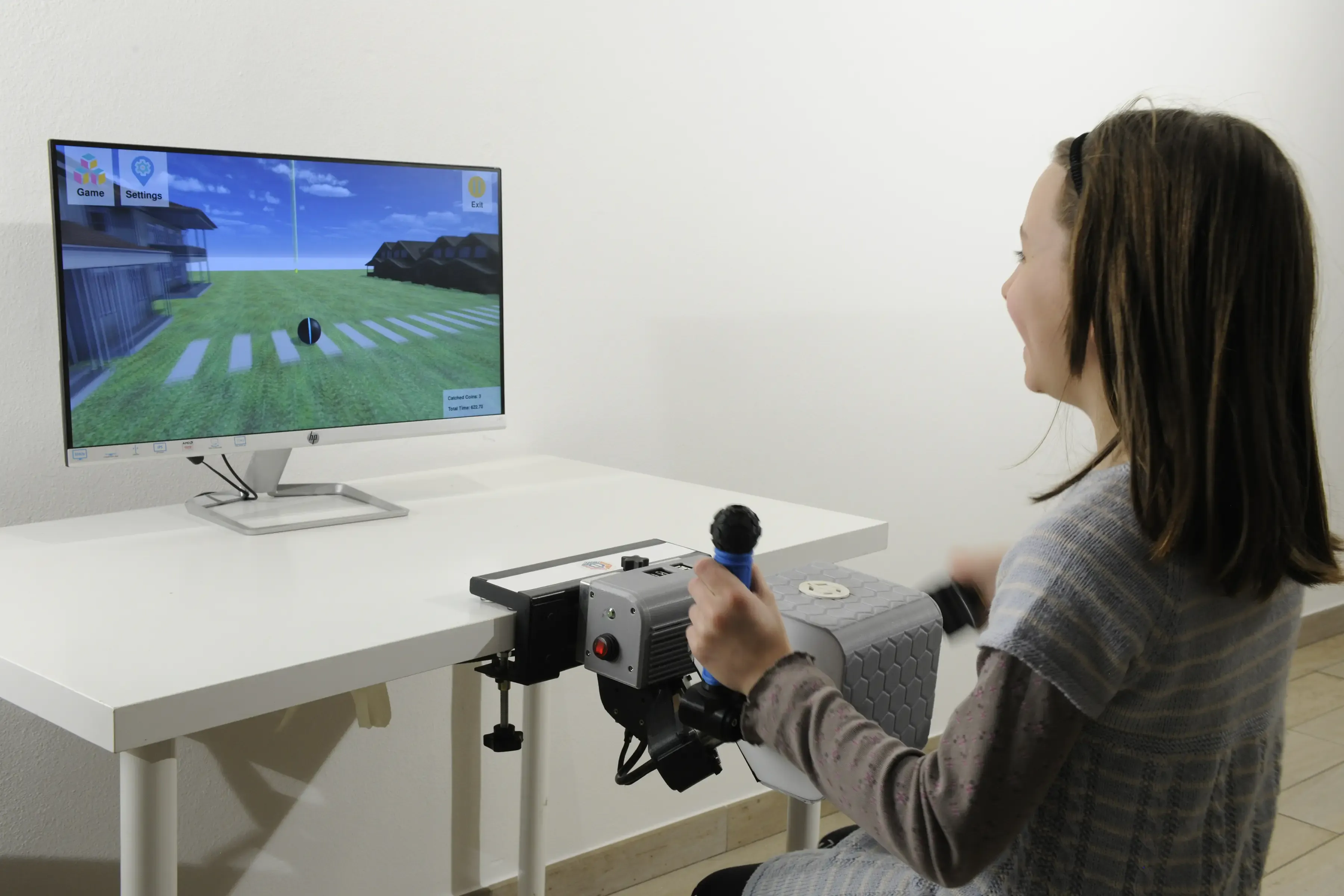
PhiCube is a portable robot that turns arm and hand exercise into play. The player moves, the game answers, and the robot helps exactly as much as each movement needs.
Hold it. Move it. Play it.
01
Pick a grip
A sphere, a wheel, pedals, a lever: each one asks the arm and hand for a different movement.
02
Move — the robot follows
PhiCube feels each push and helps or resists, anywhere from fully guided to fully free. One arm can even help the other.
03
Play — and see the progress
The movement drives the game on screen. Every session is saved, so progress can be seen instead of guessed.
One small robot instead of a room full of equipment.
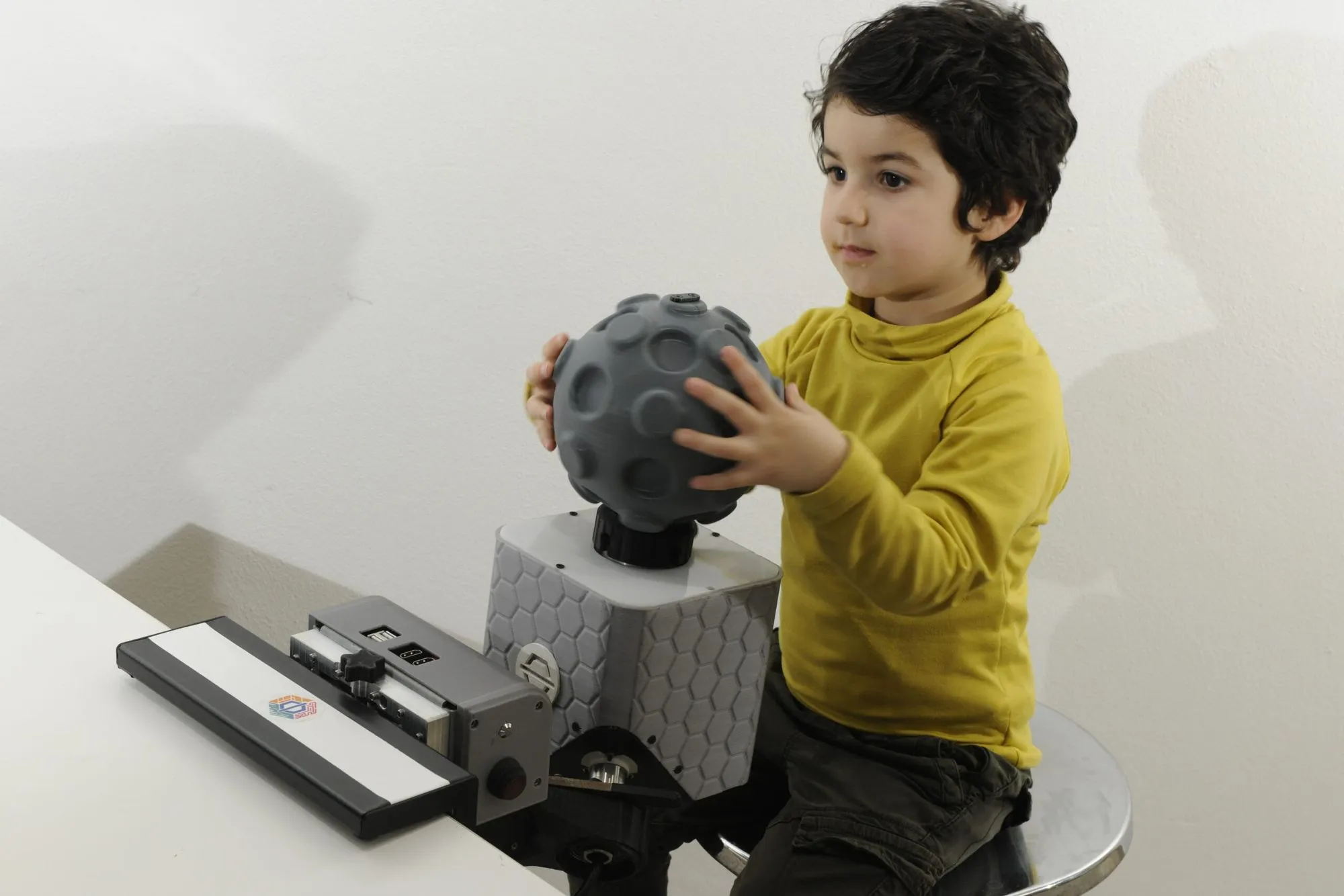
Flexible. Lightweight. Ready wherever therapy happens.
It travels in its own case, so the therapy goes where the player goes: from the clinic to the classroom, and home again.
Integrated
Motor, cognitive, communication and sensory work on one device, instead of a separate tool for each.
Adaptive
Settings follow each player's profile and move with them as they change — today's game is never too hard or too easy.
Measured, not guessed
Every session leaves a report behind: clear charts of progress that a therapist, a teacher or a parent can read.





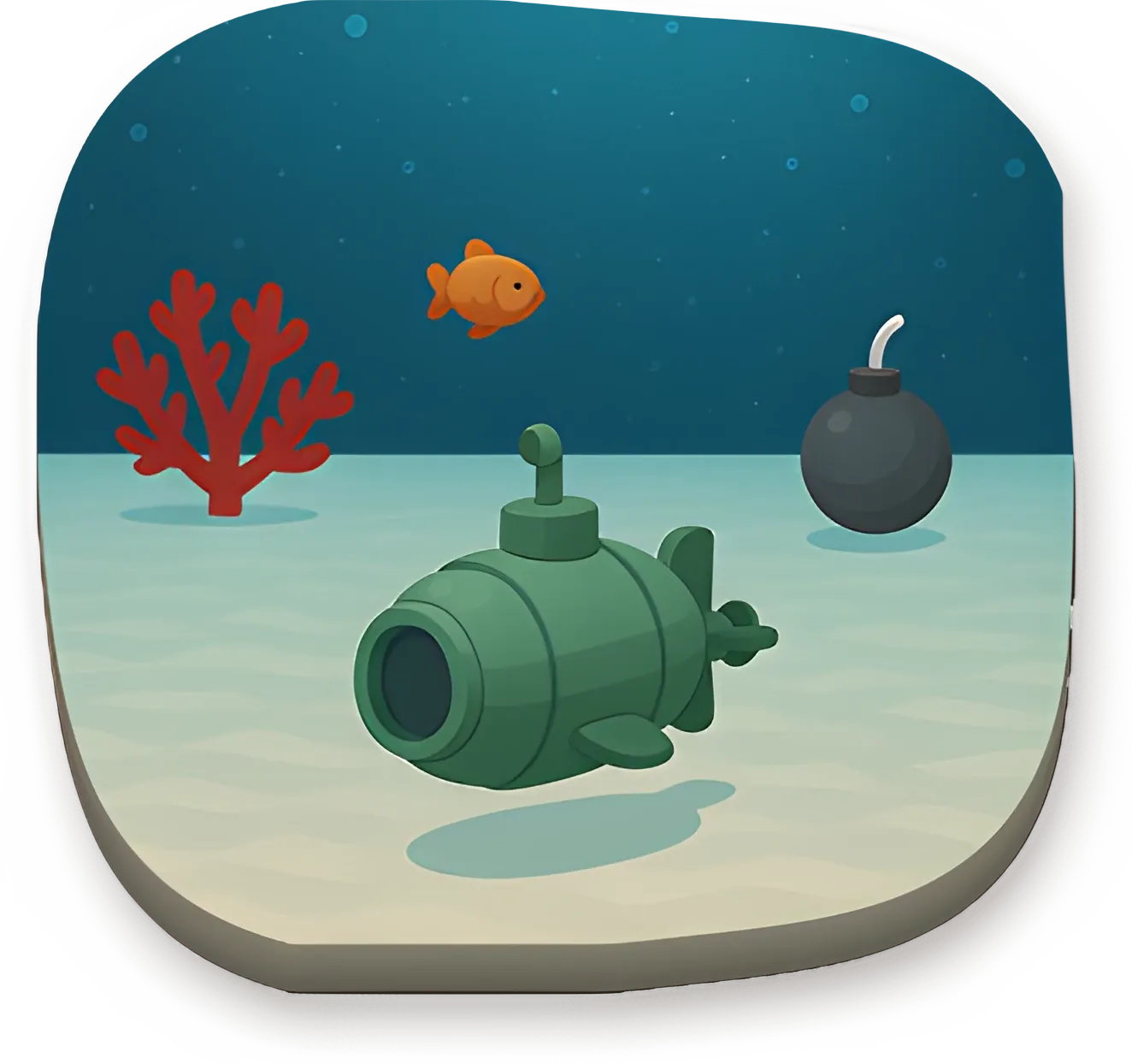


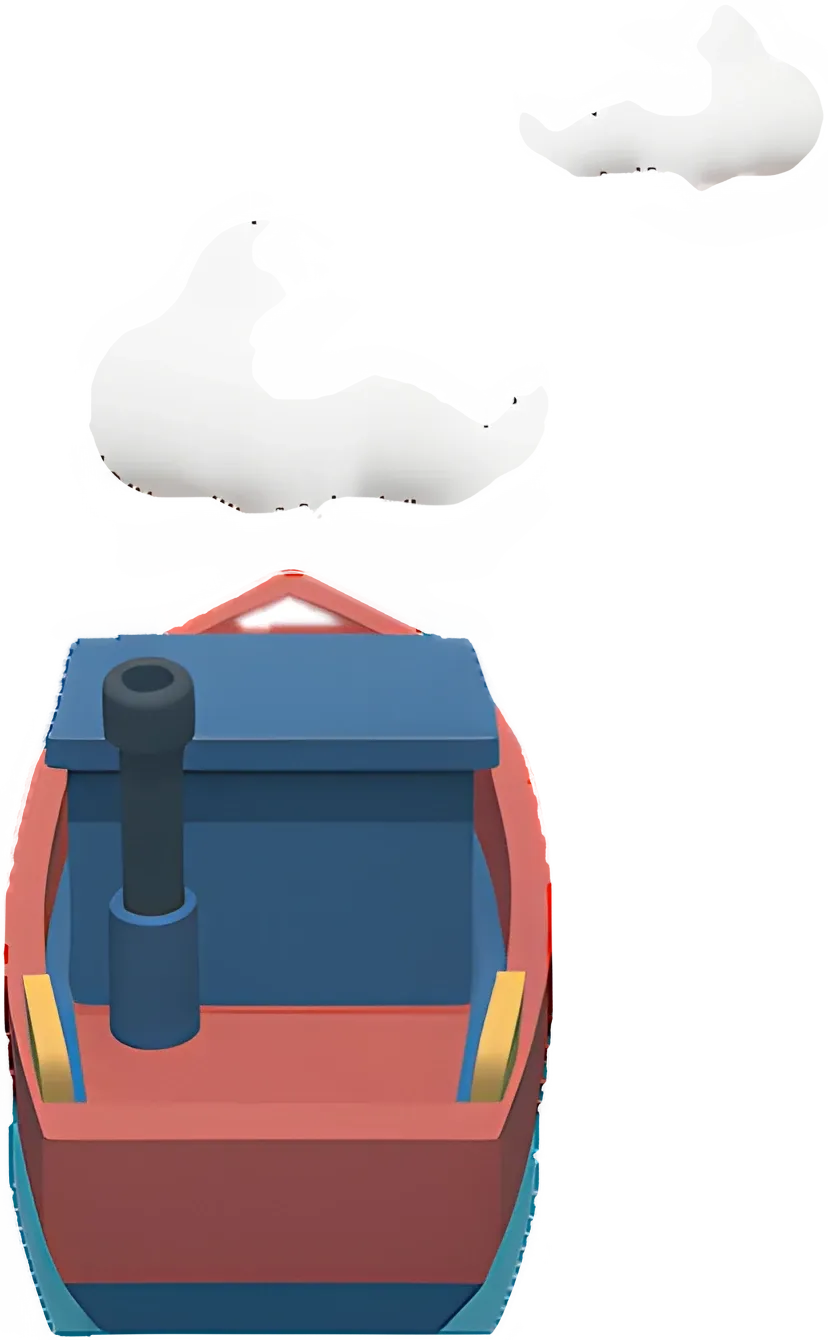

Every game is part of the therapy.
Each world is built around specific movements and abilities — reaching, turning, coordinating both arms, scanning the whole screen. The therapist picks the game for the goal; the game asks for that movement, sets the challenge to the player and records how it went.

“I am particularly fond of the PhiCube project because I saw it being born, from the first stages of collecting needs to the creation of the various prototypes. For me it represents a good practice because it includes elements of inclusive design, care in usability and aesthetics, attention to the needs of the beneficiaries (ie. children with Cerebral Palsy and caregivers), customization and use in a domestic environment. I hope to see it available on the market soon!”
Francesca Fedeli — Founder of Fightthestroke.org and FTS 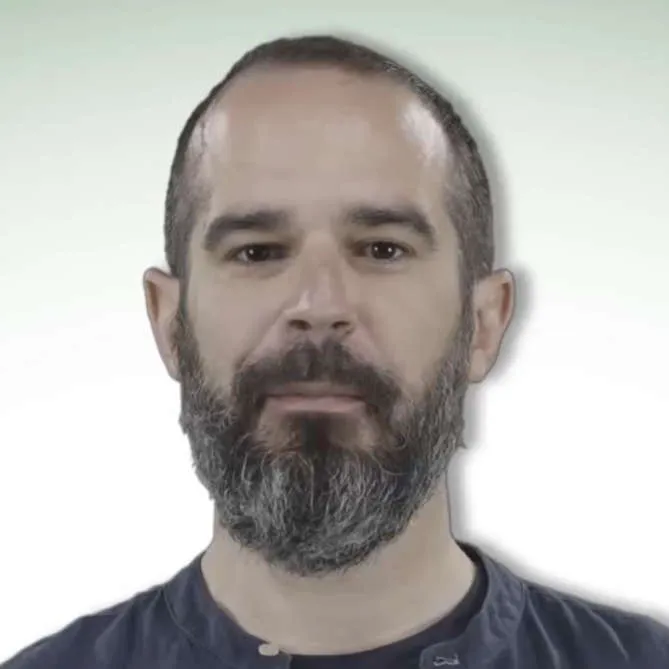
“As soon as I saw the PhiCube prototype, I imagined it in the hands of my young clients... who could do rehabilitation while playing and having fun, and above all without realizing they were doing rehabilitation. Something that spoke to the healthcare world without being healthcare. A game. A "simple" game. Finally.”
Marco Lodi Pasini — Occupational therapist
What we have been doing
Recognised by








Bring PhiCube to the people you care for.
Want to know more, see it in action, or talk about bringing it to your centre? Tell us a little about you — a person from the team will get back to you.